 The Crate
Visage
The Anvil
1. Title Inspiration: The album’s title, "The Anvil," was inspired by a gay nightclub named Club Anvil in New York City. This choice reflects the band's connections with the underground club scene, which was a major influence on their music and aesthetic.
2. Musical Evolution: "The Anvil" marked a slight shift in Visage's musical direction. While maintaining their new wave and synth-pop roots, the album incorporated more pronounced bass lines and funk influences compared to their debut album. This progression illustrated the band’s ambition to evolve and explore different sonic landscapes.
3. Iconic Singles: The album includes the hit singles "The Damned Don’t Cry" and "Night Train," both of which were successful in the UK and other European countries. "The Damned Don’t Cry" became one of Visage's signature tracks, known for its haunting synth melodies and poignant lyrics.
4. Line-Up Changes: By the time "The Anvil" was recorded, Visage had undergone several line-up changes. Notably, Midge Ure and Billy Currie, key members of the band, were becoming increasingly busy with their other project, Ultravox. Their involvement in "The Anvil" was consequently limited, which influenced the album's sound.
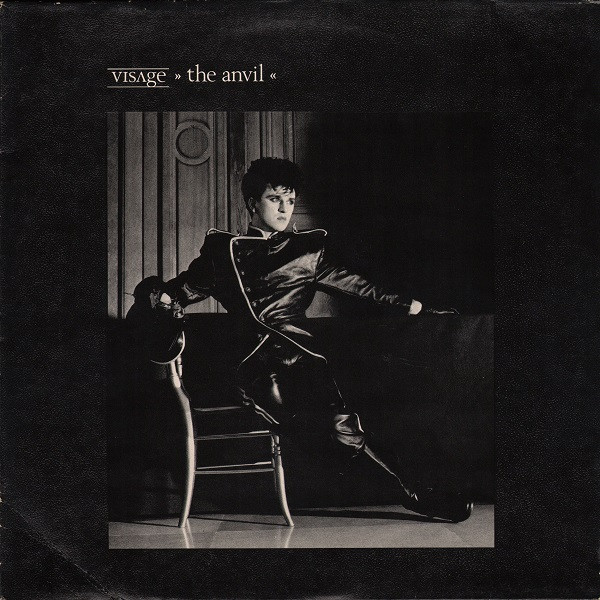
5. Cover Art and Imagery: The cover art, featuring the striking photograph of Steve Strange in a military uniform, was shot by the renowned fashion photographer Helmut Newton. The album’s art and visuals played a crucial role in cementing Visage's image as both a music and a fashion icon during the early 1980s.
6. Cultural Impact: "The Anvil" is often credited with helping to foreground the New Romantic movement, which combined futuristic, glamorous fashion with synthesizer-heavy music. Visage, particularly Steve Strange, became synonymous with this movement, influencing numerous artists and fashion designers.
7. Critical Reception: Upon release, "The Anvil" received mixed reviews but was praised for its production quality and stylish presentation. Over the years, it has gained recognition for its artistic ambition and has been reassessed as a significant work in the synth-pop genre.
Overall, "The Anvil" represents a fascinating chapter in Visage’s history, capturing the essence of 1980s club culture and the New Romantic zeitgeist.